
How to Use Lemon Vibrators When You Feel Disconnected From Your Body
Let's name what's actually happening
You're present. You're also not. That dissociated feeling, that sense of watching your body from a distance or feeling like you're moving through fog, is real. It's not broken. It's not permanent. And it's wildly more common than you think, especially for people rebuilding connection after trauma, chronic stress, or just years of not checking in with themselves.
Here's the thing: pleasure is one of the fastest pathways back to your body. Not punishment. Not forcing yourself to "be present." Pleasure. And if you've been living outside your skin for long enough, the intensity of traditional vibrators can feel like too much stimulation when you're already overwhelmed. That's where lemon vibrators change the game.
Why disconnection happens in the first place
Dissociation is your nervous system's way of saying "I need a break from this." It can show up as:
- That floating sensation where you're watching yourself from above
- Numbness that doesn't move even when something touches you
- Time gaps where you lose track of what you were doing
- A muted quality to sensation, like you're behind glass
- Emotional flatness paired with physical disconnection
It's adaptive. Your brain and body learned this skill when things felt unsafe or overwhelming. The problem isn't that the skill exists. It's that it didn't turn off when the threat passed.
When you've been dissociated for months or years, trying to reconnect through aggressive sensation (like a traditional vibrator cranked to medium) can actually deepen the dissociation. Your nervous system reads it as another threat and pulls further away. Lemon vibrators, with their gentler suction-based stimulation, meet you where you actually are instead of where you think you should be.
The neuroscience behind gentle reconnection
Your clitoris has about 8,000 nerve endings. A lemon clitoral vibrator uses suction and air-pulse technology instead of vibration, which means it's activating different neural pathways. You're not just stimulating sensation; you're creating a feedback loop between your body and your brain.
When dissociation is happening, that feedback loop is broken or stuck. The signal goes from your body to your brain, but somewhere in translation, it gets muted or lost. Gentle, consistent pressure from a lemon vibrator can help re-establish that conversation.
The suction mechanism is key here. It creates a sustained, building sensation rather than quick, repetitive stimulation. Your nervous system has time to register what's happening. Your brain can catch up. You're not being flooded. You're being invited back in.
Starting small (and I mean really small)
If you're dealing with dissociation, the instinct is often to go big and chase sensation. Don't. Start with five minutes in a quiet space where you won't be interrupted.
Using a lemon vibrator for reconnection is not about orgasm. Not right now. It's about information. What does sensation feel like? Can you notice it? Does it change if you breathe differently? If you're alone versus thinking about someone else?
Begin on the lowest setting. With a lemon vibrator, that might be pattern 1 or 2. Focus on the sensation itself, not on what you think should be happening. Your job is to notice, not to achieve. If you notice nothing at all, that's data too.
Creating the conditions that help
Three things before you start:
Temperature matters. Warm your hands first. A warm lemon vibrator, even just sitting in your palm for a minute, signals safety to your nervous system in a way cold plastic doesn't. Cold can deepen dissociation; warmth invites your body to trust again.
Grounding first. Before you use a lemon clitoral vibrator, spend two minutes on your feet feeling the ground. Press your hands against your thighs. Notice the texture of the fabric you're wearing. Name five things you can see. Your nervous system needs to know you're safe in this moment before pleasure enters the equation.
No narrative pressure. You're not trying to feel horny. You're not trying to orgasm. You're not trying to be sexy or confident or any of it. You're gathering information about what your body can feel. That's it.
The reconnection sequence
Minute 1: Place the lemon vibrator against your inner thigh, not directly on your clitoris yet. Pattern 1. Notice what that feels like. Does it feel like pressure, vibration, buzzing, heat? Just describe it to yourself.
Minute 2 through 3: Slowly move toward your vulva. Outer labia first. See if the sensation changes as you move closer. There's no rush.
Minute 4 through 5: When you reach your clitoris, stay on the lowest setting. If you feel nothing, try a different pattern or take a break. If you feel something, notice it. Is it sharp, dull, warm, numb? All of these are real.
If pleasure builds: Great. Ride it. If it doesn't, stop and come back tomorrow. Consistency over intensity.
What to do if you feel yourself drifting again
Dissociation can sneak back in even during pleasure. You'll notice your mind floating, or that familiar detached feeling creeping in. This is normal. It doesn't mean you failed.
When you notice it happening, pause the lemon vibrator. Return to grounding. Press your feet into the ground. Touch something with texture. Name what you see. Then, if you want to, resume on a lower setting.
You're not fighting dissociation. You're gently inviting your body to stay. There's a difference.
Why lemon vibrators work better for this than other toys
Traditional vibrators are usually faster, buzzer-like, more intense. For someone in dissociation, that's often overstimulation masquerading as stimulation. A lemon vibrator offers that sustained, building pressure that your nervous system can actually track and follow. It's less "shock and awe" and more "let's dance together."
The design is also smaller and more precise, which means less surface area and more focused sensation. When you're dissociated, diffuse stimulation can feel overwhelming. Focused sensation is easier to track.
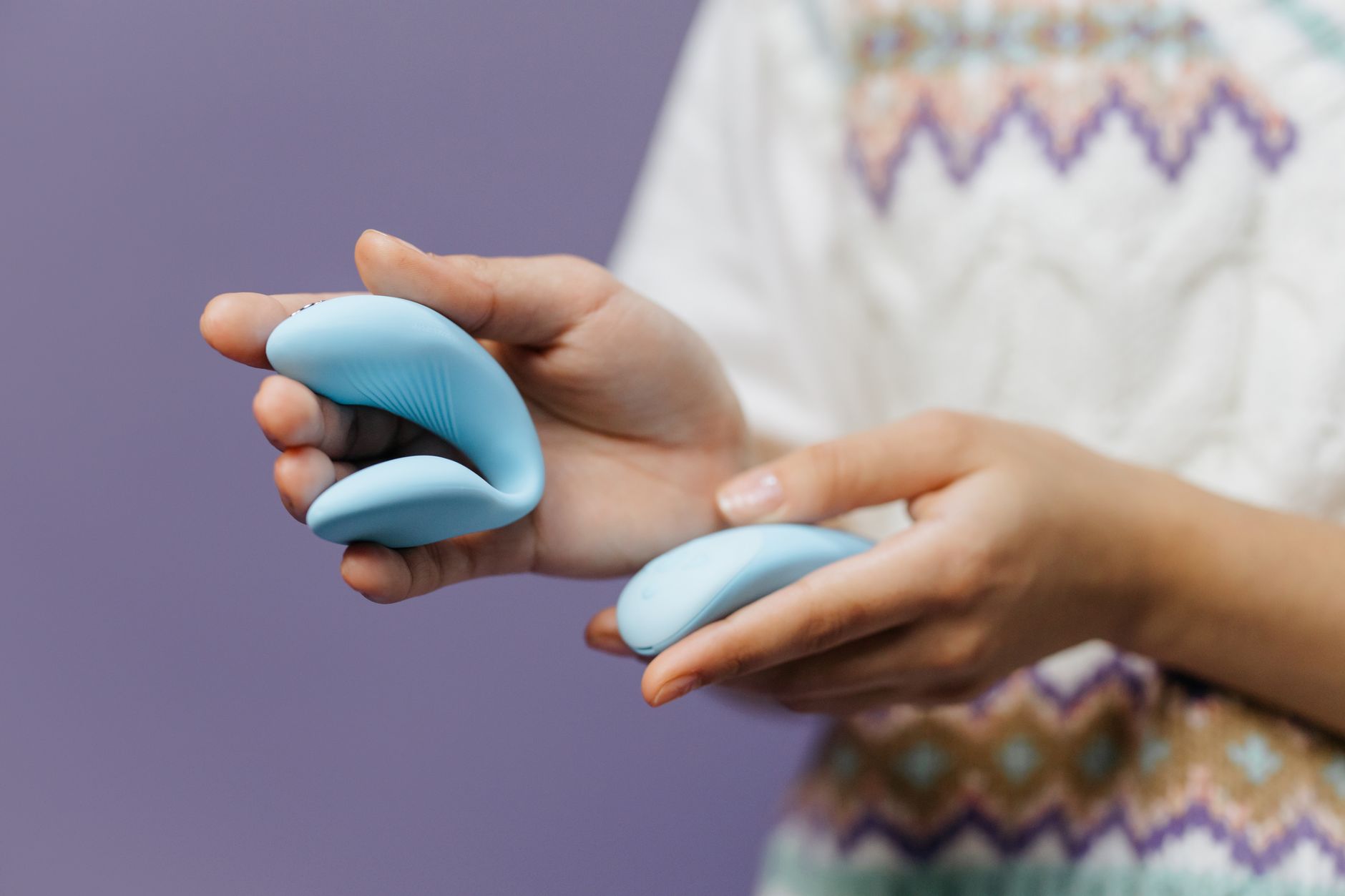
Photo by cottonbro studio on Pexels
Building the reconnection over weeks
This isn't a sprint. Week one is five minutes on the lowest setting, maybe three times. Week two, you can go to seven minutes or try pattern 2. Week three, you might notice that sensation is building more quickly or that you're present for more of the experience.
The goal is to gradually rebuild the neural pathway between your body and your brain. That takes repetition and consistency, not intensity. A lemon clitoral vibrator is patient in a way other toys aren't. It doesn't demand anything from you. It just offers sensation and waits.
When to bring a partner in (or not)
If you're working with a partner, tell them what you're doing and why. "I'm rebuilding connection with my body. I need space to do this alone first." They don't need to understand dissociation perfectly. They need to understand that this is about you slowly, safely relearning sensation.
Once you've spent three or four weeks reconnecting solo, you might invite them into the space. Not to perform or to change the outcome. Just to be present. Some people find that gentle proximity helps. Others need their partner to leave the room. Both are right.
What comes after reconnection
Once you've spent a few weeks or months using a lemon vibrator to gently rebuild sensation, your nervous system will have relearned how to track pleasure. From there, you can experiment with more intensity, different patterns, or other types of stimulation. You can explore partnered pleasure. You can actually want things again.
But even then, a lemon clitoral vibrator stays useful. Not because you're still dissociated, but because sometimes you'll need to slow down and reconnect again. That's not regression. That's maintenance.
People also ask
Can dissociation and pleasure coexist during sex?
Yes, and recognizing it is half the battle. If you notice dissociation happening during partnered sex, you have permission to pause. You can say "I'm feeling distant. I need a minute." That's not asking too much. That's asking for what you need. A lemon vibrator is also useful here because it's small, portable, and can help you drop back into your body quickly if you drift during partnered play.
How long does it take to feel reconnected to your body again?
It depends on how long you've been dissociated and what caused it. Some people feel a shift in three weeks. Others take three months. The marker isn't "I feel amazing." It's "I can notice sensation more clearly and it doesn't immediately trigger the urge to float away." Consistency matters more than speed.
Is it normal to feel nothing during pleasure if you're dissociated?
Completely normal. Your nervous system learned to mute sensation as protection. Using a lemon vibrator at low intensity is partly about training your body to trust that sensation again. You might feel nothing for several sessions. Then one day, something clicks. Patience is the practice here.
What if using a lemon vibrator makes dissociation worse?
Stop and try again another day. If it consistently makes things worse, talk to a trauma-informed therapist. Dissociation rooted in trauma sometimes needs professional support alongside self-pleasure practices. Both can coexist. A lemon clitoral vibrator is a tool, not a replacement for therapy.
Can I use a lemon vibrator if I take dissociative medication?
Yes, but check with your prescriber if you're on something like lorazepam or other benzos that increase numbness. A lemon vibrator on a low setting is usually gentler than traditional toys and works well alongside most medications. Your body might just need more time to respond.
Should I combine lemon vibrators with meditation or grounding practices?
Absolutely. Start with two minutes of grounding (feet on ground, naming what you see, feeling your breath), then use the lemon vibrator for five to seven minutes. That sandwich approach helps your nervous system understand that pleasure can exist within safety. Grounding first signals to your body that this is a contained, safe experience.
The real work is patience
Reconnecting with your body after dissociation isn't about one perfect session with a lemon vibrator. It's about showing up consistently, gently, without attachment to the outcome. Your body learned to leave. It can learn to stay. It just needs proof that staying is safe.
That's what a lemon clitoral vibrator offers. Not intensity. Not forced sensation. Just gentle, sustained invitation back home.
If you're struggling with dissociation or embodiment, reach out to us. We're here to answer questions about how lemon vibrators can fit into your healing journey. You deserve to feel at home in your body again.