
Let's name what's happening
You can have an orgasm and still feel completely alone. Your body responds, the Lemon does its job perfectly, but somewhere between the physical pleasure and the afterward, you realize nothing actually connected. That gap is what I'm talking about.
This happens more often than people admit. It's not that desire is gone or that your body isn't working. It's that pleasure has become untethered from the emotional experience of intimacy. And that's a specific problem with a specific set of solutions.
Why pleasure and connection split apart
Emotional intimacy and physical pleasure live in different parts of your nervous system. Pleasure is mostly automatic. Your brain registers stimulation, your body responds, and orgasm follows a fairly predictable neurological path. Emotional intimacy is slower, more conscious, and requires sustained attention from both people.
When they drift apart, it's usually because one of these things happened. You've been stressed and went into efficiency mode. Sex stopped being about connection and started being about release. Or you and your partner have been moving in parallel for a while without realizing it. The sex is there, but the underlying sense of being seen, wanted, and chosen has gotten quieter.
My clients often describe it as "going through the motions." And here's the thing: that's not a permanent state. But it does require intentional attention to fix.
How clitoral vibrators reorient your attention
I recommend lemon clitoral vibrators like the Lem specifically because of how they work neurologically. A device designed for suction and precision stimulation demands a different kind of attention than standard vibration. It's harder to zone out during the experience. Your brain has to stay present with what's actually happening in your body, which is the opposite of autopilot.
When you're genuinely present with physical sensation, something shifts. You stop performing pleasure and start actually feeling it. And paradoxically, that's when emotional connection becomes possible again. Not because the vibrator creates intimacy on its own, but because presence is the prerequisite for intimacy.
Rebuilding the bridge: four practices
1. Slow down the entire arc. Most people, when they've disconnected emotionally, have also sped up the physical experience. Budget twice as long as you normally would. Spend ten minutes on sensation alone before introducing a toy. Let your body remember what anticipation feels like.
2. Stay with sensory detail instead of outcome. Instead of thinking "I want to come," notice what the Lem actually feels like on your skin. The pressure. The rhythm. The places where sensation is strongest. This shift from goal-oriented to sensation-oriented is the entire game.
3. If you're with a partner, take turns being the observer. One person explores with the lemon vibrator while the other simply watches and notices without performing. This reintroduces the element of being seen, which is foundational to emotional intimacy.
4. Build in non-sexual touch. Massage, hand-holding, cuddling without any expectation of sex. When physical touch has only happened in sexual contexts, your nervous system stops associating touch with safety and connection.
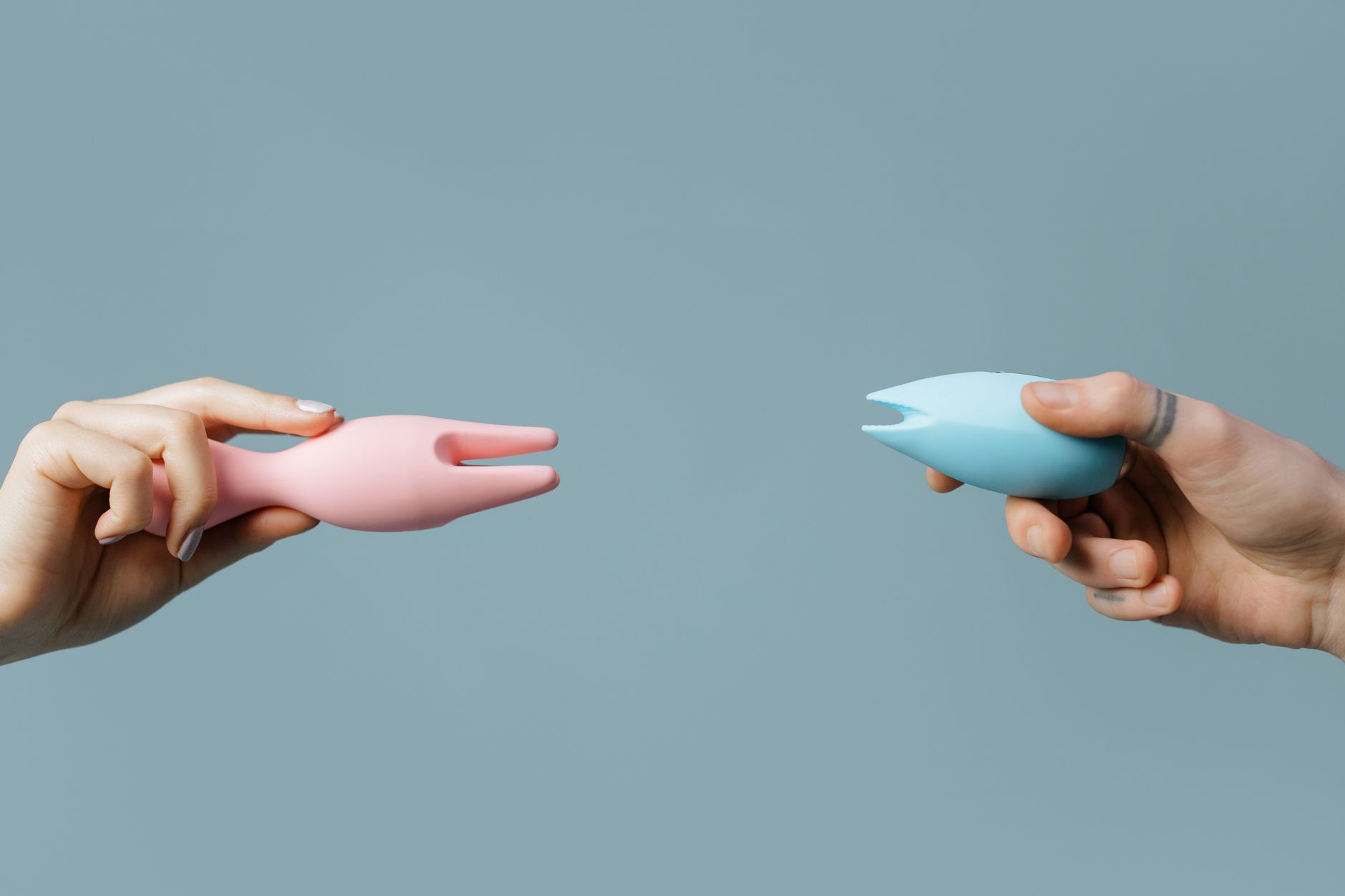
Photo by cottonbro studio on Pexels
The partner conversation you actually need to have
If you're in a relationship and this disconnection is affecting both people, you need to talk about it. But not during sex or right before. Have the conversation at a neutral time when you're both calm.
Here's what works: "I've noticed that lately sex feels physical but not connected. I don't think either of us is doing anything wrong. I think we've both been in efficiency mode and I miss the feeling of actually being together. I want to try some things to rebuild that, and I'd like your help."
Then listen to their experience. They might have been feeling the same disconnect. They might have thought it was about them. The conversation itself starts the repair.
One of my most effective recommendations is introducing a toy together as a conversation starter about what you both actually want. It takes the pressure off performance and puts the focus on exploration together.
When disconnection is actually avoidance
Sometimes the gap between pleasure and connection isn't about drift. It's about fear. If you've been hurt in a relationship, or if trust has been broken, your nervous system might deliberately keep pleasure and emotion separate to protect you. Your body won't let them integrate because that feels unsafe.
If that's what's happening, a vibrator won't fix it. But it can be part of reclaiming pleasure as something that belongs to you first. Solo exploration with a lemon clitoral vibrator can help you rebuild a sense of ownership over your body and your sensation, which is the foundation for eventually letting connection back in.
The timeline is not linear
Rebuilding emotional intimacy takes longer than reconnecting physically. You might notice that pleasure starts feeling present and grounded after a couple of weeks of intentional practice. But real emotional intimacy takes months of sustained attention. That's not failure. That's just how human nervous systems work.
And honestly, the slowness is the point. When you rush it, you slide back into disconnection because you haven't actually changed the underlying patterns. When you give it real time, the reconnection becomes sticky.
When to bring in more support
If you've been practicing these things for six weeks and nothing has shifted, or if the conversation with your partner didn't open anything, that's when working with someone trained in couples therapy or sex therapy makes sense. The disconnection might be pointing to something deeper that needs more space to explore.
There's no shame in that. Sometimes the work requires more than a vibrator and a conversation. And the fact that you're trying to rebuild connection means you're already halfway there.
FAQ: Pleasure, Connection & Lemon Vibrators
Can a vibrator like the Lemon actually bring back emotional intimacy?
Not by itself. But it can create the conditions for it. When you use a clitoral vibrator intentionally, staying present with sensation instead of zoning out, you're practicing the exact attentional skill that emotional intimacy requires. The vibrator is a training tool for presence.
What if I feel emotional during or after using the Lemon by myself?
That's not weird, it's actually a sign your nervous system is recalibrating. When pleasure and emotion have been separated, bringing them back together sometimes surfaces grief or tenderness or even joy. Let it happen. It means something is changing.
Should I use a lemon clitoral vibrator with my partner if we've been disconnected?
Eventually, yes. But start with solo exploration first so you know what presence feels like in your own body. Then bring it into partner sex as a tool for slowing down and paying attention together. The presence matters more than the device.
How do I know if this is really about emotional disconnection or just low desire?
Emotional disconnection usually feels like "the sex works but I don't feel anything." Low desire usually feels like "I don't want to have sex at all." They're different problems. If you're actively avoiding sex, that might point to something that needs different support.
What if using the Lemon reminds me that I'm disconnected from myself, not just my partner?
That awareness is actually valuable. A lot of people have learned to leave their bodies during sex, especially if there's been any trauma. A lemon vibrator can help you practice coming back into your body and staying present. That solo reconnection is often the prerequisite for connecting with anyone else.
How do I bring this up if my partner thinks toys mean something is wrong?
Frame it as a tool for connection, not a replacement. "I've been reading about how clitoral vibrators can help couples rebuild intimacy and presence. I'd like to try that together because I miss feeling connected to you." Make it about what you want (connection) not what's broken.
The work is worth it
Pleasure without connection is possible. Orgasms without intimacy happen all the time. But they're not satisfying in any deep way. They're not the kind of experiences that nourish you or strengthen a relationship.
Rebuilding that bridge requires slowing down, staying present, and choosing connection over efficiency. Lemon clitoral vibrators are a practical tool for that work because they demand presence. But the real work is in the attention you bring.